The Physics of Frozen Pipes in New England
Every winter, Connecticut homeowners face the reality of sub-zero temperatures. In inland valleys like Danbury, Bristol, and Meriden, nighttime lows routinely drop into the single digits, while coastal winds in Milford, Fairfield, and Greenwich drive bitter chills deep into crawlspaces. When water freezes inside a closed pipe, it expands by approximately 9% in volume. Contrary to popular belief, it is rarely the ice blockage itself that ruptures the pipe wall; rather, as the ice dam expands along the length of the tubing, it creates immense hydraulic pressure between the ice and the closed faucet. When this trapped pressure exceeds 3,000 to 5,000 PSI, standard copper tubing or PVC joints split catastrophically.
When the ambient temperature rises and the ice plug melts, pressurized water pours through the split tubing, discharging up to 8 to 12 gallons of water per minute directly into ceilings, wall cavities, and basements. Taking aggressive, proactive measures before cold weather strikes is the only effective defense against devastating water damage.
Where Pipes Freeze First in Connecticut Residences
Plumbing lines running through conditioned living areas rarely freeze as long as household heat is maintained. Instead, freeze ruptures occur almost exclusively in unconditioned or under-insulated zones of the building envelope:
- Exterior Wall Kitchen & Bathroom Risers: Sinks positioned against poorly insulated exterior walls, especially in older Victorian homes or post-war ranches where wind infiltration reaches the stud bays.
- Unheated Crawlspaces & Cantilever Overhangs: Second-story bathrooms situated over unheated garage bays or decorative cantilevered architectural overhangs frequently freeze because cold air circulates directly beneath the floor joists.
- Basement Rim Joists & Foundation Vents: Water supply lines located near unsealed foundation vents, broken cellar windows, or drafty sill plates where frigid outdoor air leaks into the basement ceiling.
- Exterior Sillcocks (Hose Bibbs): Garden hoses left connected to frost-proof sillcocks prevent the internal valve mechanism from draining. Trapped water freezes and splits the valve body inside the basement wall.
Proven Preventive Steps for Homeowners
Protecting your property before an arctic blast requires methodical preparation:
- Disconnect All Outdoor Hoses: Before November freezes arrive, unscrew every garden hose, drain residual water from splitters, and close interior shutoff valves feeding outdoor spigots if available.
- Insulate Exposed Pipe Runs: Wrap all accessible water lines in unheated basements, crawlspaces, and attics with high-density closed-cell polyethylene foam insulation tubes or fiberglass heat wrap. Ensure elbows and tees are taped tightly without gaps.
- Open Cabinet Doors During Arctic Blasts: When night temperatures drop below 15°F, open lower kitchen and bathroom vanity doors to allow warm household air to circulate directly around supply pipes and P-traps.
- Let Faucets Drip a Steady Stream: Allowing a pencil-thin stream of water to run continuously from faucets served by exposed exterior walls keeps water moving and relieves trapped hydraulic pressure even if minor ice crystals form.
- Maintain Consistent Thermostat Temperatures: Do not set your thermostat back at night during severe cold snaps. Keep ambient indoor temperatures at a constant minimum of 65°F day and night.
Critical Action If a Pipe Freezes
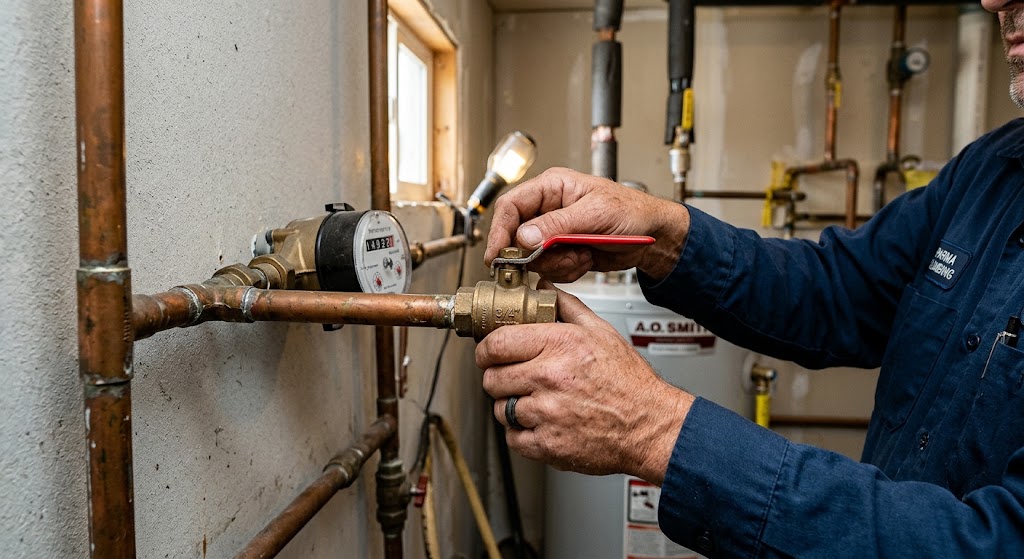
If you turn on a faucet during a cold snap and only a trickle or nothing comes out, a pipe has frozen. Immediately turn off your home's main water shutoff valve before attempting to thaw the line. This ensures that if the pipe has already split behind the wall, water will not flood your home as the ice plug melts.
How to Safely Thaw a Frozen Line
If the pipe is accessible in your basement or under a sink, you can attempt gentle thawing. Keep the connected faucet open so melted water and steam can escape. Apply gentle, indirect heat using an electric hair dryer, heat lamp, or portable space heater positioned at a safe distance. Start applying warmth near the faucet and work backward toward the freeze point. Never use an open flame blowtorch; thousands of structure fires are caused annually by homeowners using torches on copper pipes near dry wooden framing.
If the frozen section is inaccessible behind drywall, or if you discover bulging, split copper or dripping joints, call our emergency telephone dispatch immediately at (888) 205-7875. Our licensed technicians carry specialized pipe-thawing equipment and universal repair fittings to restore your plumbing safely without risking fire or water damage.